
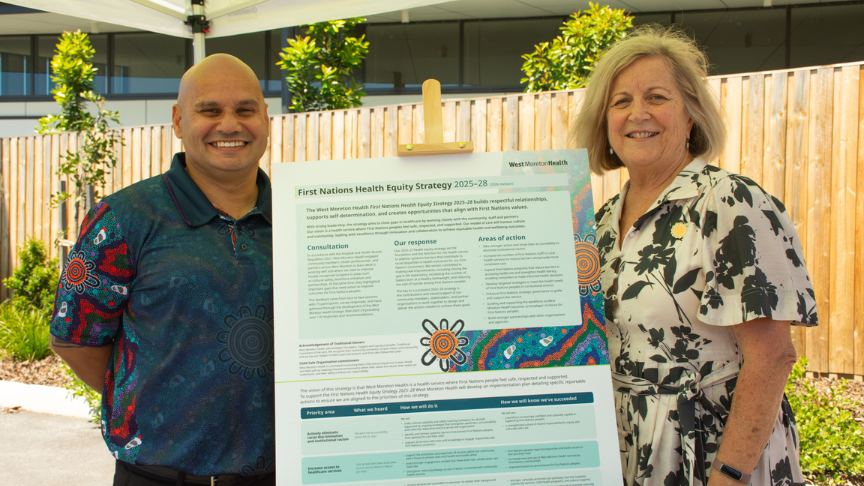
West Moreton Health has reaffirmed its commitment to improving health outcomes for Aboriginal and Torres Strait Islander peoples with the launch of its revised First Nations Health Equity Strategy.
The strategy was launched during a community celebration at Ripley Health Services (Moodoombar Dabbil), where Elders, community members, staff and partner organisations gathered as part of the health service's NAIDOC showcase and 50 Years of Deadly celebrations.
West Moreton Health Board Chair Sue Scheinpflug said the strategy reflected a shared commitment to ensuring First Nations peoples receive culturally safe, accessible and equitable healthcare.
"This strategy is about listening, learning and acting together with First Nations communities to improve health outcomes and experiences across our region," Ms Scheinpflug said.
"We know that real change happens when communities help shape the services they use. This strategy reflects the voices, experiences and aspirations of Aboriginal and Torres Strait Islander peoples and sets out how we will work in genuine partnership to deliver better care."
The revised strategy builds on work already underway across the health service and outlines priorities including improving access to healthcare, increasing the First Nations workforce, strengthening cultural capability, eliminating racism and embedding culturally safe care throughout the patient journey.
Aboriginal and Torres Strait Islander Health Unit Director Maurice Woodley said the launch was an important milestone, but the focus must remain on action.
"This strategy belongs to our communities," Mr Woodley said.
"We want Aboriginal and Torres Strait Islander peoples to feel safe, respected and confident when they access our services. Achieving health equity means removing barriers to care, listening to community voices and creating lasting change that improves outcomes for current and future generations."
The strategy aligns with Queensland's Health Equity Framework, which aims to close the gap in health outcomes and life expectancy for Aboriginal and Torres Strait Islander peoples compared with other Australians.
The launch coincided with a celebration of culture, community and connection, with local organisations, health providers and community groups showcasing services and support available throughout the region.
Ms Scheinpflug said improving health equity was a shared responsibility across the entire health service.
"The strategy sets a clear direction, but meaningful change comes from the actions we take every day. We are committed to ensuring First Nations peoples receive safe, respectful care and have equitable access to the services they need, when they need them."
Find out more: First Nations Health Equity Strategy 2025–2028