
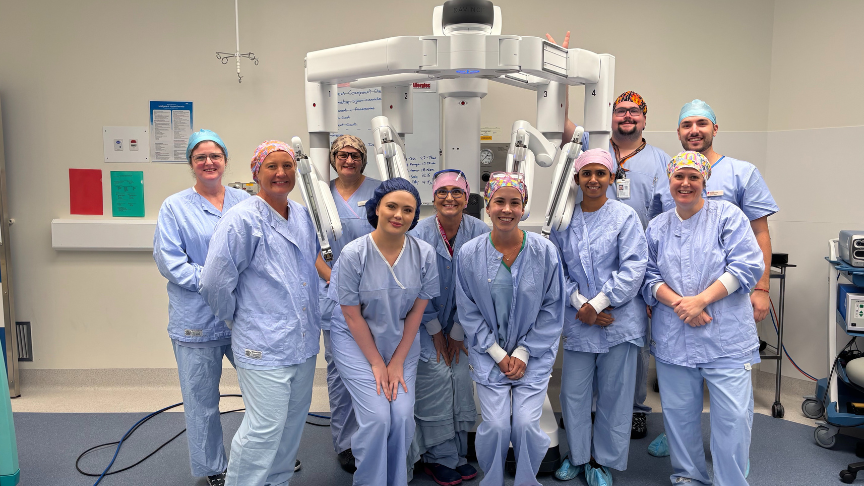
Ipswich Hospital surgeons have performed more than 100 robotic-assisted surgeries since the da Vinci XI surgical robot was wheeled into theatre earlier this year.
The technology is helping more patients receive advanced surgical care close to home, with less invasive procedures and faster recovery.
With a dual-console system, Ipswich Hospital can support hands-on surgical training while maintaining patient safety through direct supervision and collaboration.
West Moreton Health Chief Executive Hannah Bloch said the introduction of robotic-assisted surgery marked an important milestone for surgical services in the region.
“We’re proud to expand access to advanced surgical care for the West Moreton community,’’ Ms Bloch said.
“The robot enables our surgeons to perform less invasive surgery which leads to better recovery and health outcomes for our communities.’’
Director of Obstetrics and Gynaecology Dr Kanapathippillai Sivanesan is among the West Moreton Health specialists trained in robotic surgery for procedures, including hysterectomies and endometriosis removal.
He said the system offers surgeons superior precision and visibility.
Dr Sivanesan's patient, Kelly Sutton, was amazed to be well enough to go home the day of her hysterectomy surgery to continue her recovery.
“It builds great confidence when you're going in for a major surgery and everybody is together and cohesive…it's very reassuring," Ms Sutton said.
“My post-surgery recovery was really positive. I had minimal pain.”
Director of Surgical Services and Intensive Care Unit Dr Michael Auld said the new technology would enable more patients to receive specialised surgical care closer to home.
“Robotic-assisted prostate surgery is one of the procedures shown to benefit most from this technology, particularly in supporting precision, nerve preservation, and recovery,” Dr Auld said.
MEDIA NOTE: Interview audio files available on request.